
The PMRC, the Filthy Fifteen, and the Sticker That Changed My Record Collection

If you grew up in the 80s, you remember the moral panic. If you didn’t, it might sound like satire: US Senators interrogating rock stars, parents’ groups waving vinyl sleeves like courtroom evidence, and a small black‑and‑white rectangle — Parental Advisory — that could change the fate of an album.
For me, a teenager in Launceston, that sticker wasn’t a warning. It was a lighthouse. It told me exactly which albums I wanted to hear.
But to understand why that sticker mattered, you have to understand the storm that created it.
The Rise of the Washington Wives
In 1985, a bipartisan group of politically connected women formed the Parents Music Resource Center (PMRC). Their mission: warn parents about music containing sex, violence, drugs, or “occult” themes.
The founders became known as the Washington Wives:
Tipper Gore — wife of Senator (and future Vice President) Al Gore
Susan Baker — wife of Treasury Secretary James Baker
Pam Howar — wife of realtor and Republican donor Raymond Howar
Sally Nevius — wife of former Washington City Council Chairman John Nevius

Tipper Gore’s spark moment came when she bought Purple Rain for her daughter and heard Prince’s “Darling Nikki.” The lyric about a “sex fiend masturbating with a magazine” ignited a crusade.
But the PMRC wasn’t just a group of concerned parents. They had serious backing.
The Beach Boys, Coors, and the Money Behind the Moral Panic
The PMRC’s influence grew quickly thanks to high‑profile supporters:
Mike Love of The Beach Boys contributed support.
Joseph Coors, of the Coors brewing family, provided office space and funding.
This alliance of political power, conservative activism, and corporate money turned popular music into a battleground. Rock, metal, and eventually rap became the targets of a national morality campaign.
The PMRC framed themselves as protectors of children. But their messaging often veered into moral panic, painting entire genres — especially heavy metal — as corrupting forces.
The Filthy Fifteen: The PMRC’s Most Wanted List
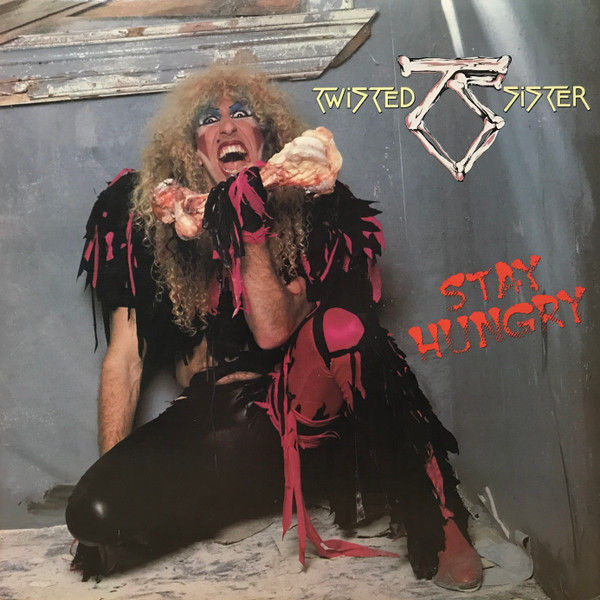
To strengthen their case, the PMRC created a list of songs they considered the most dangerous to America’s youth — the Filthy Fifteen.
The Filthy Fifteen
Prince – Darling Nikki (Sex/masturbation)
Sheena Easton – Sugar Walls (Sex)
Judas Priest – Eat Me Alive (Sex/violence)
Vanity – Strap On “Robbie Baby” (Sex)
Mötley Crüe – Bastard (Violence/language)
AC/DC – Let Me Put My Love Into You (Sex)
Twisted Sister – We’re Not Gonna Take It (Violence)
Madonna – Dress You Up (Sex)
W.A.S.P. – Animal (F** Like a Beast)* (Sex/violence/language)
Def Leppard – High ’n’ Dry (Saturday Night) (Drugs/alcohol)
Mercyful Fate – Into the Coven (Occult)
Black Sabbath – Trashed (Drugs/alcohol)
Mary Jane Girls – In My House (Sex)
Venom – Possessed (Occult)
Cyndi Lauper – She Bop (Sex/masturbation)


Looking at the list today, it’s almost charming in its variety: Prince and Cyndi Lauper sharing space with Venom and Mercyful Fate. It reveals more about the PMRC’s anxieties than about the music itself.
Albums That Bit Back: W.A.S.P., Megadeth, and More
The PMRC wanted to shame artists. Instead, they inspired some of the most defiant music of the decade.
W.A.S.P. – Live… in the Raw
Features “Harder, Faster,” where Blackie Lawless directly calls out the PMRC.
Megadeth – So Far, So Good… So What!
“Hook in Mouth” is a full‑frontal attack on censorship, naming the PMRC explicitly.
Their cover of “Anarchy in the U.K.” even rewrites lyrics to include the PMRC alongside government agencies.
Other artists joined in: Judas Priest with “Parental Guidance,” Alice Cooper with “Freedom,” and countless punk and metal bands who turned the PMRC into a punchline.
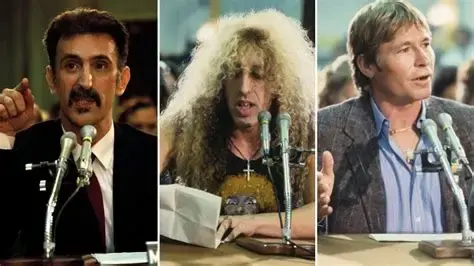
The Senate Hearing: Dee Snider, Frank Zappa, and John Denver Take the Stand
On September 19, 1985, the Senate Committee on Commerce held a hearing on explicit lyrics. It was the PMRC’s big moment — and the day their narrative began to unravel.
Three musicians testified:
Frank Zappa — called the PMRC’s proposals “an ill‑conceived piece of nonsense.”
John Denver — compared censorship efforts to Nazi book burnings.
Dee Snider — delivered the most unexpected and devastating testimony of the day.
Dee Snider: The Stereotype Destroyer
The PMRC had spent months painting heavy metal fans as:
Satanists
Drug addicts
Alcoholics
Violent degenerates
So when Dee Snider walked into the hearing room in full metal attire — wild hair, ripped denim, chains — the PMRC thought they had their perfect villain.
Instead, they got a calm, articulate, sober Christian father.
In his opening statement, Dee dismantled the PMRC’s assumptions:
He was a Christian.
He did not drink.
He did not use drugs.
He believed in responsible parenting — including actually listening to what your kids are listening to.

He argued that it was irresponsible for parents to demand warning labels when they weren’t even taking the time to understand the music themselves.
Then came the moment that made rock history.
Tipper Gore had accused Twisted Sister’s “Under the Blade” of promoting sadomasochism and rape. Dee explained — patiently — that the song was about his bandmate’s surgery.
Then he delivered the knockout line:
“The only sadomasochism in that song is in the mind of Ms. Gore.”
The room shifted. Senators who expected a cartoonish metalhead found themselves listening to a man who was smarter, more prepared, and more grounded than the committee trying to shame him.
Dee didn’t just defend metal — he destroyed the PMRC’s central stereotype.
The Outcome: The Birth of the Parental Advisory Sticker
Even before the hearings ended, the Recording Industry Association of America (RIAA) agreed to place warning labels on albums with explicit content.
By November 1985, the now‑iconic Parental Advisory label was born.
It wasn’t the detailed rating system the PMRC wanted, but it changed the industry forever.
Retail Backlash: When the Sticker Became a Barrier

The sticker didn’t just warn parents — it triggered corporate censorship.
Wal‑Mart and other major chains refused to stock stickered albums.
Others hid them behind counters or restricted sales to adults.
For mainstream pop and rock artists, this meant real financial damage.
But for metal and rap?
It had the opposite effect.
The sticker became a badge of authenticity — a sign that the music was dangerous, rebellious, and worth seeking out. Sales in those genres often increased, especially among teenagers.
Launceston, My Teenage Years, and the Forbidden Fruit Effect
This wasn’t just an American issue. It reached all the way to Launceston, where I spent my teenage years flipping through racks of vinyl and cassettes.
And for me?
That black‑and‑white sticker was a magnet.
It told me the music had been deemed too raw, too real, too dangerous.
It told me someone in power didn’t want me to hear it.
And that was all the invitation I needed.
While some artists suffered from reduced shelf space in big US chains, the opposite happened in my world. I gravitated toward the bands the PMRC tried to silence.
The sticker didn’t protect me from anything. It introduced me to everything.
Looking Back: What the PMRC Really Achieved
Decades later, the PMRC is gone, but its legacy remains:
They succeeded in creating a warning label.
They failed to tame music.
They accidentally created one of the greatest marketing tools in music history.
For those who lived through it, the PMRC era is a vivid memory — a time when music, politics, and rebellion collided in record stores and Senate chambers alike.
For younger readers, it’s a reminder that every generation has its censors… and its Dee Sniders.
And somewhere right now, a kid is scrolling through albums, spotting that Explicit tag, and thinking exactly what I thought in Launceston:
That’s the one I want.


Comments